Nature has its own way of restoring balance and often the gentlest solutions can be the most effective. Creating a wildlife-friendly garden doesn’t mean surrendering your flowers to pests, it simply means working with nature instead of against it.
Slugs and snails can wreak havoc on young plants, but there are several natural methods worth trying before reaching for harsh chemicals:
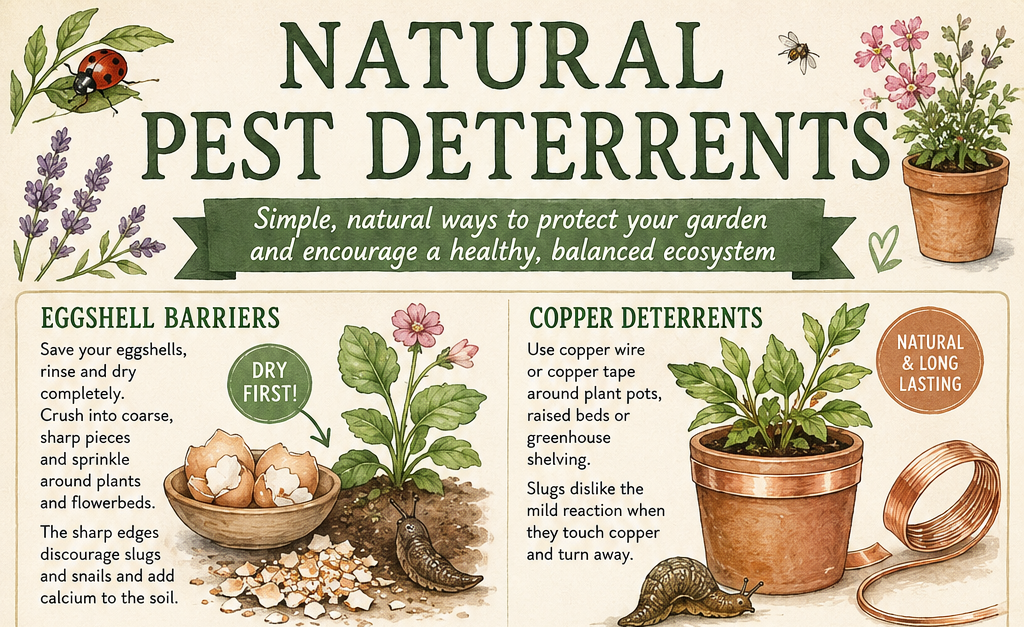
🥚 Eggshell barriers
Save your eggshells, rinse them well and allow them to dry completely (a sunny windowsill or low oven works perfectly). Crush into coarse sharp pieces and scatter around vulnerable plants and flowerbeds. Slugs dislike crawling over the sharp texture and the shells also add calcium back into the soil.
🧲 Copper deterrents
Copper wire or copper tape wrapped around plant pots, raised beds or greenhouse shelving can help deter slugs naturally. When slugs touch copper it creates a mild reaction they dislike, encouraging them to turn away.
🍺 Beer traps
A shallow dish or jam jar lid sunk slightly into the soil and filled with beer can attract slugs away from plants. They’re drawn to the yeast scent and fall into the liquid. Not glamorous… but surprisingly effective.
🌹 Aphid & fruit fly traps
Aphids are notorious for damaging roses and tender new growth. A simple homemade trap can help reduce flying pests naturally:
- Small bowl or jar
- Apple cider vinegar or fruit scraps
- Tiny drop of washing up liquid
The scent attracts the flies while the soap breaks the surface tension, causing them to sink. You can also put this in a spray bottle and spritz your flowers, particularly rose buds and the underside of leaves to kill off the aphids.
🐞 In America, it’s quite common for people to buy ladybird larvae for their gardens because ladybirds are incredible natural aphid hunters. There are some available on Amazon but I’m not too sure how well they survive through the post.
Fun fact:
Ladybird larvae actually eat more aphids than adult ladybirds — although they look a bit like tiny black and orange mini alligators, they’re garden superheroes!
💧 Offer shallow water sources
A tiny dish with pebbles and water helps all beneficial insects, especially during hot weather.
🌱 Companion planting works beautifully
Planting garlic, chives and mint around roses can help deter aphids while encouraging a more balanced garden environment overall.
🌱 Plants that naturally repel pests
Certain plants and oils can help keep unwanted visitors away:
- Basil helps deter flies
- Citronella is well known for discouraging flying insects
- Peppermint is brilliant for flies and is also said to help deter rats and mice due to its strong scent
🐦 Bird feeder tip
If squirrels and rodents are helping themselves to the bird seed, try adding a little chilli powder to the mix. Mammals react to the heat compound in chilli, while birds do not, meaning the birds can happily continue feeding while rats and squirrels tend to stay away.
A thriving garden isn’t about eliminating every insect — many are essential pollinators and part of a healthy ecosystem. Sometimes the goal is simply gentle balance rather than total control 🌸✨
Checkout my Amazon store for helpful deterrents: https://amzn.eu/d/07b2xtit
Leave a Reply